




Running a small or medium-sized FMCG or e-commerce business means making hard choices about how to allocate limited time, money and management attention. Building the brand, winning listings, generating sales and developing products usually deserve priority. Yet every physical product still has to be filled, labelled, wrapped, bundled or otherwise prepared before it can reach a retailer or customer.
Getting this wrong creates more than an untidy pack. Poor labelling, damaged packaging, missed launch dates or inconsistent presentation can lead to returns, retailer complaints, wasted stock and reputational damage.
One option is to outsource these processes to a specialist co-packer. Co-packing covers activities such as filling, shrink-wrapping, repacking, labelling and preparing gift sets or bundles – everything needed to make products retail-ready. For an SME, the main benefit is not simply convenience. It can remove several layers of fixed and unpredictable cost. In this article, we examine four areas in which outsourcing packaging can generate meaningful savings.
- Avoiding machinery and premises costs
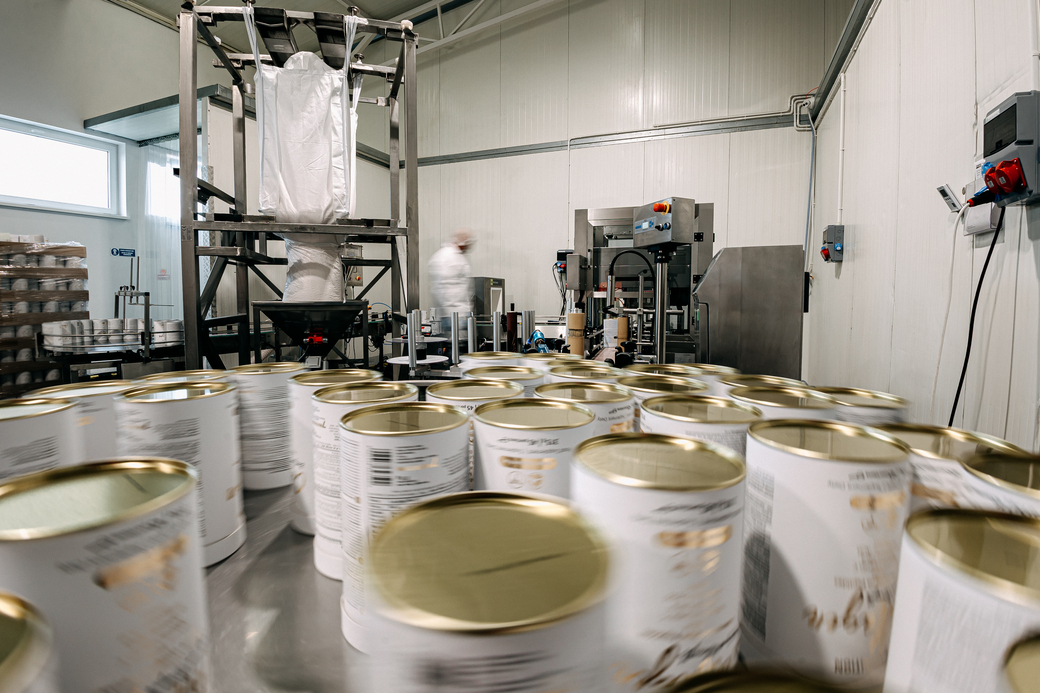
Most packaging operations require specialist equipment. Depending on the product, that may include filling machines, labellers, shrink tunnels, sealers, checkweighers, coding systems or equipment for mixing and dosing ingredients. Even relatively simple machinery can represent a substantial investment for an SME, especially when several processes or pack formats are involved.
The purchase price is only the beginning. The equipment needs floor space, utilities, maintenance, cleaning and servicing. The premises may also need to meet food-safety, hygiene, ventilation or workflow requirements. A machine that appears affordable in isolation can therefore create a much larger operational commitment.
A co-packer already has machinery installed in suitable production areas and can spread its cost across multiple clients. The SME pays for the required service rather than owning equipment that may sit underused between production runs. This is particularly valuable when volumes are still developing or when different campaigns require different packaging technologies.
- Reducing labour and seasonal staffing costs
Machines do not operate themselves. Employees must be recruited, trained and supervised, while someone must also organise shifts, cover absences and maintain output when demand rises.
Many co-packing jobs cannot be fully automated. Unusual packs, mixed bundles, promotional sets, product rework and premium presentation often require manual handling. Short runs and frequent format changes can make automation uneconomic, increasing the need for flexible labour.
This creates a difficult cost structure for SMEs. Keeping a permanent team means paying for capacity during quieter periods, while recruiting temporary staff for seasonal peaks can be slow and disruptive. New workers also need training before they can perform accurately and efficiently.
Co-packers maintain trained production teams and manage fluctuations across different clients and projects. Seasonal peaks become the provider’s staffing challenge rather than the SME’s. UK businesses can reduce costs further by working with co-packing service providers such as Poland-based TRANSPAK, as labour in Central and Eastern Europe remains more affordable and, just as importantly, more readily available for manual packaging work.
- Including quality control in the service
Packaging requires more than operators. Someone must check that the correct components are being used, labels are applied properly, quantities are accurate and finished packs meet the agreed specification.
Building this capability internally creates another layer of cost. Experienced quality-control employees are generally more specialised than basic production labour, while procedures, records, checks and corrective actions all require management time. For an SME running packaging only intermittently, this expertise may be expensive to maintain.
A professional co-packer should already have documented quality procedures, trained supervisors and checks built into each project. The client still needs to agree clear specifications and verify that the provider has suitable standards and certifications, but it does not have to create the entire control system from scratch.
This reduces the risk that savings made on labour or equipment are later lost through rejected deliveries, retailer penalties, packaging waste or product recalls.
- Limiting the cost of mistakes and urgent work
Packaging problems rarely occur at convenient times. A label may contain an error, products may need to be repacked for a different market, or a promotional campaign may approach its launch date before the final sets are ready.
An SME handling everything internally bears the full cost of these situations. Staff may need to be diverted from normal work, new materials ordered quickly and temporary capacity arranged at short notice. Limited experience can also increase waste or make the corrective work slower than necessary.
An established co-packer is more likely to have spare production options, trained manual teams and experience with rework, relabelling and urgent campaigns. This does not eliminate every problem, but it can make recovery faster and more controlled.
There is also a broader risk benefit. When packaging is handled by a specialist under a clear service agreement, responsibilities, specifications and corrective procedures can be agreed in advance. Without an onboarded partner, a business may have to search for emergency support only after a costly problem has already occurred.
Turning fixed costs into a manageable service
For UK FMCG and e-commerce SMEs, co-packing can convert several fixed or unpredictable costs into a service purchased when needed. It can remove the need to own machinery, maintain dedicated premises, recruit seasonal teams and build a complete packaging quality function internally.
Outsourcing will not suit every product or volume. Transport, lead times, confidentiality and the need for direct process control should all be considered. Nevertheless, where packaging is important but not a core strength, a reliable co-packer can help an SME protect quality while keeping more capital and management attention focused on products, customers and growth.