

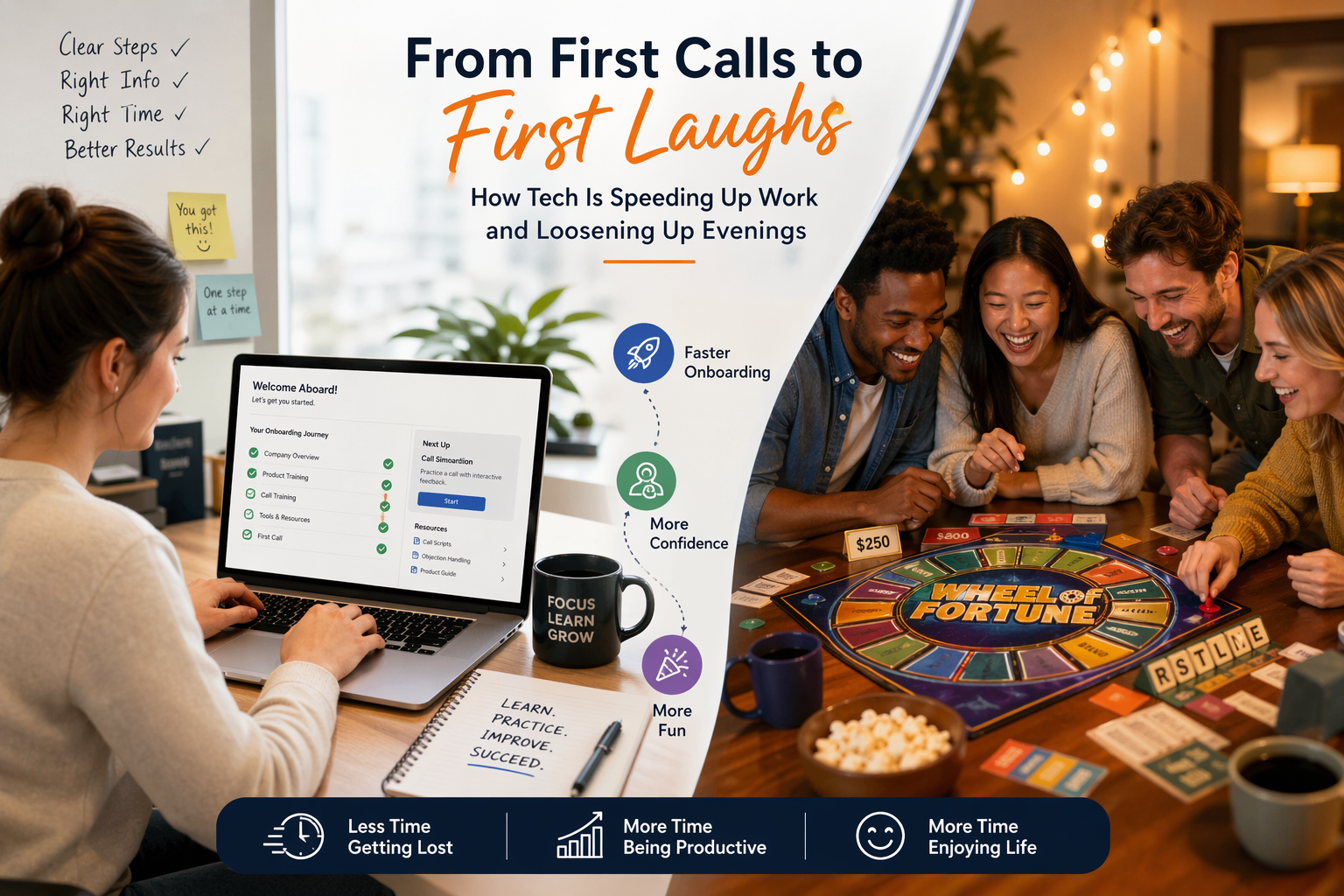


Starting something new used to feel… slow.
You’d sit through long training sessions, flip through manuals, maybe shadow someone for weeks before you felt even slightly confident. And even then, you were guessing half the time.
Now it’s different. Not completely effortless, but definitely faster.
New hires can jump into systems that guide them step by step. Prompts show up where they need them. Information is easier to find. In some cases, you’ll notice people getting comfortable in days instead of weeks.
That shift matters more than people realize. It changes how confident someone feels early on.
Why Getting Up to Speed Faster Actually Changes Behavior
When people feel lost, they hesitate.
They double-check everything. They avoid taking initiative. They stick to the safest path possible, even when it’s not the best one.
But when onboarding moves quicker—like with modern sales rep onboarding tools—something else happens. People start trying things sooner. They engage more. They ask better questions.
They still make mistakes, sure. That part doesn’t go away.
But the gap between “I don’t know what I’m doing” and “I think I’ve got this” gets shorter. And that’s huge.
It’s Not Just About Speed, Though
There’s a risk here too.
If everything moves too fast, people can feel overwhelmed in a different way. Like they’re expected to know more than they actually do.
So the better systems don’t just rush people through. They pace things. They break learning into smaller pieces. Give just enough information at the right moment.
Kind of like learning a game.
You don’t read every rule upfront. You pick it up as you go.
That Same Pattern Shows Up at Home
Here’s where it gets interesting.
The way people learn at work isn’t that different from how they engage at home. Especially during shared activities.
Take something like setting up a Wheel of Fortune gamenight. Nobody wants a long explanation before starting. You just jump in, figure it out as you go, laugh when someone messes up.
That’s part of the fun.
If it felt like a training session, no one would enjoy it.
Why Simplicity Keeps People Engaged
Whether it’s work or home, people stick with things that feel easy to follow.
Not simple in a boring way. Just clear.
At work, that might mean dashboards that actually make sense. Steps that are easy to repeat. Feedback that connects to what someone just did.
At home, it’s similar. Games that don’t require constant rule-checking. Activities that keep moving without too many pauses.
Once something gets confusing, people check out. You can see it happen. A glance at the phone, a step away from the table, attention drifting somewhere else.
And pulling it back? That’s always harder than keeping it in the first place.
Feedback Feels Different in Each Setting
This part is kind of funny.
At work, feedback can feel serious. Even when it’s meant to help. Someone pointing out what you could do better always carries a bit of weight.
At home, feedback shows up differently. More like teasing. Or quick corrections during a game. “No, that’s not how it works,” followed by laughter.
Same idea. Different tone.
And that tone matters.
Because people respond better when feedback feels natural instead of formal. When it fits the moment instead of interrupting it.
The Role of Momentum
Momentum might be the biggest factor in both spaces.
When things are moving, people stay engaged. They don’t overthink. They just act.
At work, that might look like handling calls or tasks without long pauses in between. One action leading smoothly into the next.
At home, it’s the flow of a game night. One round leading into another without long breaks. Everyone staying involved.
Once momentum breaks, it’s noticeable.
Someone leaves the room. Someone else stops paying attention. The energy drops. And getting it back takes effort.
Why People Are Starting to Expect Both
Here’s something that’s changing.
People don’t separate work and home experiences as much as they used to. Not in terms of expectations, anyway.
If systems at work feel slow or confusing, it stands out more. Because people are used to smoother experiences elsewhere. Same goes the other way around.
So the demand for clarity, speed, and ease is rising across the board.
Not in a loud way. Just quietly, through expectations.
Where It All Lands
At the end of the day, people want things to feel manageable.
At work, that means getting up to speed without feeling lost. At home, it means having fun without overcomplicating it.
Technology is helping with both. Not perfectly, but enough to notice.
And once you notice that things can be smoother—learning faster, playing easier, staying engaged longer—it’s hard to go back to the slower, clunkier way of doing things.
Even if you can’t quite explain why.