



Why Above-Ceiling Areas Are a Business Blind Spot
In commercial kitchens, operational priorities are understandably focused on visible, high-use areas that directly affect service delivery. Work surfaces, equipment, and front-of-house compliance are closely monitored because they are immediately observable by staff, auditors, and Environmental Health Officers. In contrast, spaces above suspended ceilings often fall outside routine management oversight.
Ceiling voids contain critical infrastructure such as ventilation ducting, pipework, electrical cabling, and fire protection systems. While these assets are essential to business continuity, the areas surrounding them are frequently excluded from formal cleaning and maintenance programmes. Restricted access, competing priorities, and unclear responsibility between facilities, maintenance, and cleaning functions all contribute to this oversight.
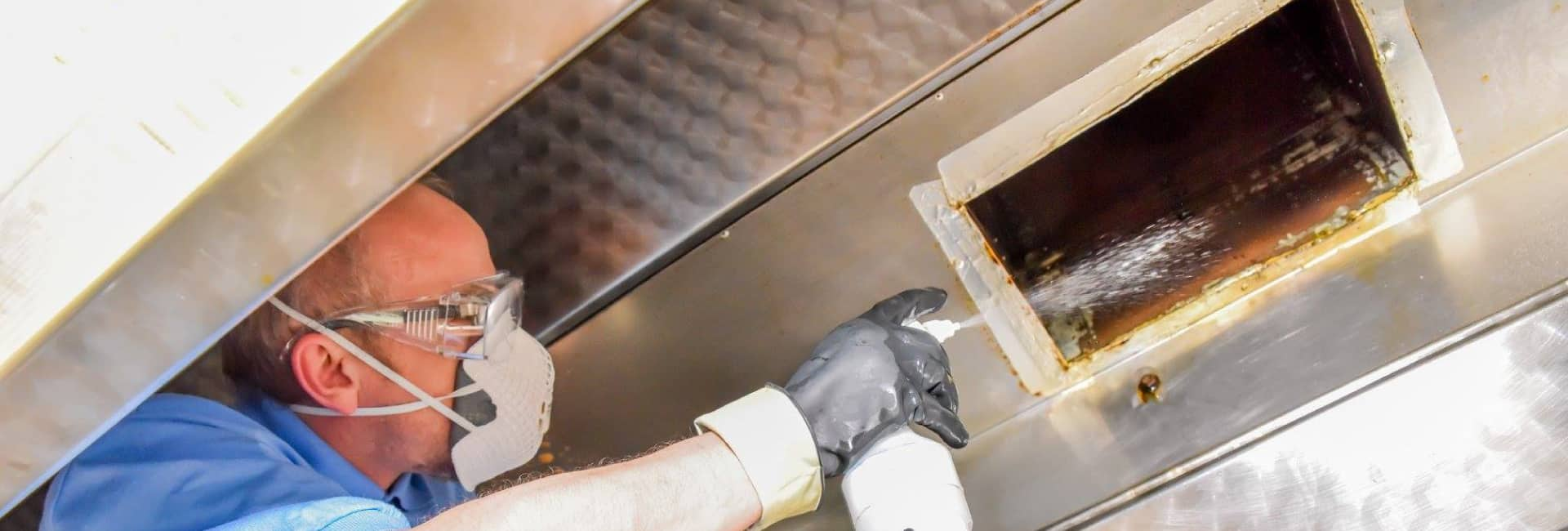
From a business perspective, this creates unmanaged risk. Grease, moisture, and airborne particulates generated during cooking migrate upwards and accumulate in ceiling voids. Over time, this hidden contamination can undermine compliance, increase fire risk, and expose operators to unplanned costs and operational disruption.
What Accumulates Above Commercial Kitchen Ceilings and Why It Matters
The ceiling void in a commercial kitchen is continually exposed to contaminants produced during daily operations. Heat, steam, and grease vapours rise through ventilation systems and settle on ductwork, pipework, and structural surfaces.
Grease accumulation is a primary concern. Even with regular kitchen extractor fan cleaning, fine grease particles can escape into surrounding voids and adhere to services above the ceiling. This residue attracts dust and debris, creating conditions that increase both hygiene and fire risk.
Typical contaminants found above commercial kitchen ceilings include:
- Grease and oil residues from cooking vapours
- Dust and airborne particulates drawn in by ventilation airflow
- Moisture and condensation, increasing the risk of mould growth
- Pest activity, as concealed spaces provide shelter and food sources
- Bacteria and odours retained within accumulated residue
These contaminants do not remain isolated. Air movement, vibration, or maintenance activity can dislodge deposits, allowing them to re-enter food preparation areas or ventilation systems. What begins as a hidden issue can quickly translate into visible hygiene failures, equipment contamination, or inspection non-compliance.
The Commercial Risks of Compliance Failures, Fire Exposure, and Financial Impact
Poorly managed above-ceiling hygiene presents direct commercial risk. From a compliance standpoint, contamination can contribute to failed Environmental Health inspections, lower food hygiene ratings, or enforcement action. These outcomes can damage brand reputation, reduce customer confidence, and affect revenue.
Fire risk presents even greater exposure. Grease is highly flammable, and when it accumulates around ducting, extractor systems, or electrical services, it significantly increases the likelihood of fire ignition and rapid spread. Fires originating above ceilings are particularly costly due to delayed detection, increased damage, and extended business interruption.
There are also insurance and liability considerations. Insurers and fire risk assessors increasingly expect evidence that all areas of risk, including concealed voids, are actively managed. Inadequate maintenance can result in increased premiums, disputed claims, or non-compliance with policy conditions.
To mitigate these risks, many operators engage professional commercial cleaning services capable of addressing high-risk, non-visible areas in line with regulatory and insurer expectations.
When Professional Above-Ceiling Cleaning Becomes a Commercial Necessity
Above-ceiling areas are not suitable for ad hoc or in-house cleaning. Contamination typically develops gradually and may only be identified during audits, maintenance works, or post-incident investigations, often when the cost of remediation is already significant.
Professional intervention becomes a commercial necessity when unmanaged risk begins to threaten compliance, safety, or operational continuity.
Common triggers for specialist above-ceiling cleaning include:
- Environmental Health inspection failures or warnings
- Persistent grease odours or declining indoor air quality
- Visible staining or leakage around ceiling tiles and vents
- Fire risk assessments identifying contaminated ductwork
- Refurbishments, equipment upgrades, or changes in kitchen use
Specialist cleaning providers operate with trained personnel, certified access equipment, and robust safety controls. They are experienced in working around live services and critical infrastructure, minimising downtime and operational disruption.
Addressing these risks proactively is significantly more cost-effective than responding to enforcement action, fire damage, or unplanned closures.
A Strategic Approach to Protecting the Business Through Planned Specialist Cleaning
The most effective way to control above-ceiling hygiene risk is through a planned, preventative cleaning strategy aligned with wider facilities and risk management programmes. Scheduled specialist cleaning ensures contaminants are removed before they compromise safety, compliance, or asset performance.
Integrating above-ceiling cleaning with ventilation and duct maintenance schedules allows businesses to manage risk holistically while reducing disruption and avoiding duplicated costs.
A structured approach delivers measurable commercial benefits, including:
- Reduced fire risk and associated insurance exposure
- Improved inspection outcomes and regulatory confidence
- Lower likelihood of unplanned closures or downtime
- Extended lifespan of ventilation and building infrastructure
- Clear audit trails to demonstrate due diligence and compliance
Professional providers understand the commercial pressures of foodservice operations and work flexibly around trading hours where possible. Comprehensive risk assessments and method statements ensure work is delivered safely, efficiently, and in line with business objectives.
By treating above-ceiling hygiene as a strategic operational consideration rather than a reactive task, commercial kitchens can reduce risk, protect revenue, and maintain uninterrupted service while avoiding costly surprises hidden out of sight.