


This exclusive interview with Dustin Giannelli was conducted by Tabish Ali of the Motivational Speakers Agency.
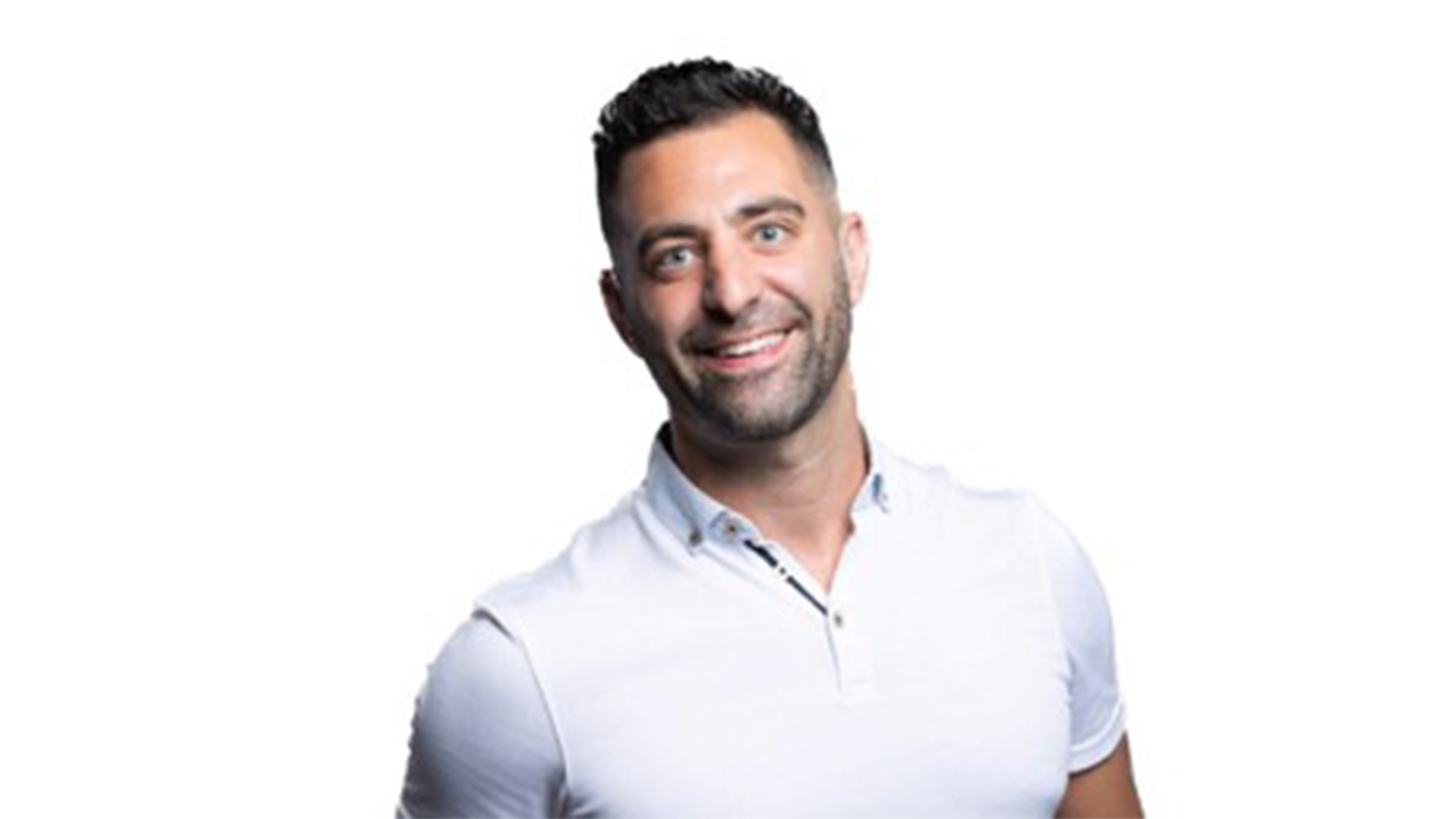
Dustin Giannelli is a disability awareness speaker, accessibility advocate and Founder and CEO of HearsDustin. Diagnosed with profound hearing loss at five, Dustin draws on his lived experience to help organisations improve communication, accessibility and workplace culture.
He has delivered keynotes and workshops for organisations including Sony, NBCUniversal, Converse, Peloton, Ralph Lauren and Princeton University.
In this exclusive interview with the Diversity & Inclusion Speakers Agency, Dustin explains how his grandfather’s positive mental attitude shaped his response to adversity, why psychological safety affects staff retention and how businesses can measure the impact of their DEI work.
Question 1. How have your experience of hearing loss and your grandfather’s influence shaped the mindset you bring to organisations?
Dustin Giannelli: “As a professional keynote speaker, what I love doing is shifting the mindset. It’s all about creating alignment and creating a new mindset.
“McDonald’s Corporation is an example. They had me in their headquarters in Chicago here in the States. They had global watch parties in India, Australia, Morocco, the UK and all across North America.
“They did a fantastic job in making sure that this message around inclusion was heard across the globe. I’m honoured to have served as their keynote speaker, to be that voice. I share my story with hearing loss as a vessel to the message to help organisations communicate and collaborate more effectively.
“My late grandfather, who was a double amputee, taught me how to turn negatives into a positive. He never took no for an answer. He did what he had to do to accommodate for himself and for others. His motto was PMA, positive mental attitude.
“Even before I lost my hearing around age five, that’s the attitude that I learned from him. He normalised disability in my household and in my community.
“When I lost my hearing, I didn’t see it as a disability. I wore hearing aids. I still wear them today. They were similar to glasses. Glasses help you see and hearing aids help you hear.
“But my grandfather had a prosthetic hook. He had a wooden leg: physical disability. That’s where you see my disability. I air quote “disability” because the word “ability” is in “disability” for a reason.
“We have the ability to make change, to change the mindsets, to be more positive. My motto is called “Be on offence”. It’s how to create a more proactive mindset versus a reactive one.”
Question 2. What are the organisational and financial consequences of failing to support employees’ mental health, belonging and psychological safety?
Dustin Giannelli: “When they don’t take their mental health seriously, it actually costs $120,000 to replace an employee, one to two times the amount of their salary on average.
“That’s what we learned with a lot of the Fortune 500 global HR teams, people and culture teams and internal communication teams that I work with across Fortune 500 organisations. It’s very expensive to replace employees.
“Those that feel disengaged in the workplace or don’t feel like they belong or don’t feel included may leave after three, five months of onhand training, or maybe they’ve been there for years. Now we have to replace a leader, and that’s not always easy.
“Then there’s psychological safety, where your leader just left the company and all of the managers below are saying, “Oh my god, he or she or they left the company. What’s that say about the organisation?”
“It all comes down to psychological safety.”
Question 3. Beyond stated commitments, how should organisations assess whether their DEI work is improving employee experience and performance?
Dustin Giannelli: “Over 70% of people perform better when their voices are heard. For people like myself with hearing loss, it’s not always easy to speak up.
“When you know you need help, you need an accommodation. It’s not always easy to ask. There’s a two-way street. Employers need to ask their employees, “What can we provide for you?” But employees need to say, “This is what I’m familiar with.”
“That’s an opportunity for innovation to introduce new accessibility service providers and new accommodations. Measuring real-world DEI efforts equates to the success of the employee.
“Are they being productive? Are they helping with the bottom line? Are they increasing the culture of the workplace?
“That’s what I get excited about: helping people feel like they’re not alone because truly they’re not.
“There are 48 million Americans affected by hearing loss, and by the year 2050, that’s increasing to 74 million.
“Globally, there are about 430 million Americans affected by hearing loss. That number is going up to 700 million.
“We’re not going anywhere. We need to help each other. Sixteen per cent actually go out and get the help they need.
“That just means 84% of people who know they need help aren’t actually seeking it. That’s what I help people do.”
Question 4. How can employees draw on their previous skills, experiences and relationships to bring their authentic selves to work?
Dustin Giannelli: “Before becoming a professional keynote speaker, I worked in the commercial architecture and design world. I was helping design corporations to be more inclusive and collaborative with universal design in mind.
“The pandemic happened, shut everything down and went virtual overnight. When that happened, I shifted my industry and focused on video accessibility, technology and all things closed captioning.
“That segued me into launching heresdustin.com. My point in sharing all of that is everybody was something before they became this.
“We need to use all of those skills that we have, all of those experiences or all of those relationships to bring our full selves to work. That’s what allows us to be authentic because everything in the past connects in one way, shape or form.
“That CHRO goes to this corporation. “That was a great leader. I’m going to go to this corporation.”
“Bring your most authentic self from one place to the next. That’s where innovation happens.”