

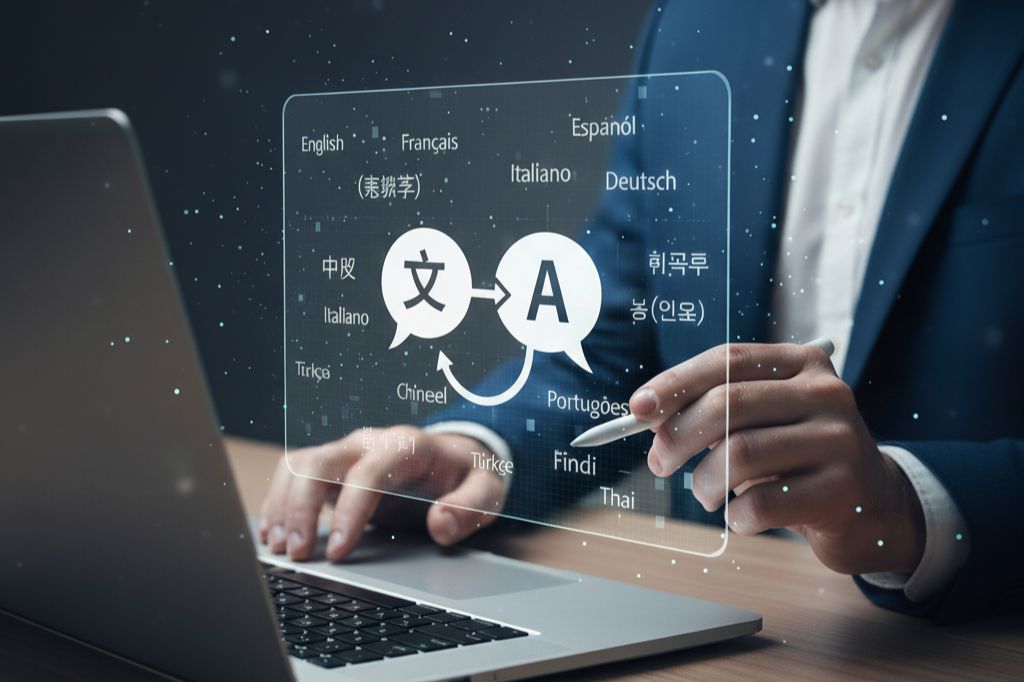



To win the hearts of your customers, you have to go deeper – you have to localise. This means adapting everything from your product to your marketing to fit the local culture, language, and technical standards. In many ways, this is one of the most important best practices of business translation.
The Real Benefits of Business Localisation
Localisation is a strategic move that directly impacts your bottom line. It brings a range of benefits that simple translation can’t match, helping you to connect with customers and grow your business.
- Increased Revenue: Customers are far more likely to make a purchase when product information is available in their native language.
- Deeper Customer Trust: Localisation builds a strong emotional connection with users, which strengthens brand loyalty.
- Improved Search Visibility: Using local keywords and relevant content improves your ranking on local search engines like Google or Baidu.
- Reduced Support Costs: When a product is well-localised, users are less likely to encounter confusion, leading to fewer support inquiries.
- A Strong Competitive Advantage: By localising, you immediately stand out from competitors who rely on a single, generic English version of their product.
These benefits together create a powerful case for making localisation a core part of your global strategy.
Building Localisation Strategy for Your Business
A successful localisation effort requires a solid strategy. Here’s how you can start:
- Define Your Goals: Aligning your localisation goals with your broader business objectives is the first and most critical step.
- Conduct In-Depth Market Research: Understand the local buying habits, cultural norms, and even the local humor.
- Perform a Content Audit: Prioritise which content is essential for a new market and which can be left for later.
- Plan for the Long-Term: Build a process that allows for continuous localisation as you update your products and services.
- Establish Key Performance Indicators (KPIs): Define specific metrics to track, such as time-to-market, conversion rates, and support ticket volume.
- Build Your Localisation Team: This can be a hybrid model combining in-house specialists and external partners. Key roles include a Localisation Manager, Linguists, and Engineers.
The Right Tools and Your Localisation Team
Executing your strategy depends on having the right people and tools in place.
Localisation Management Platforms (LMPs) are the central hub of your localisation. A platform like Crowdin allows you to manage translations for websites, mobile apps, and marketing content all in one place. It integrates directly with your development and content management systems, so new content is automatically sent for translation. LMPs provide features like in-context translation, which allows translators to see exactly where a string of text appears in the UI, dramatically improving accuracy.
Translation Memories (TMs) are a database of your past translations. The next time you encounter the same phrase, the system automatically suggests the previous translation, which ensures consistency and saves a massive amount of time and money.
A Glossary is a master list of key terms and how they should be translated. This is crucial for maintaining brand voice and ensuring that specific product names or slogans are translated correctly by everyone on your team.
The best localisation results come from a blend of human and machine power. Use machine translation for fast, high-volume content, and rely on human linguists and native-speaking reviewers to refine the quality and ensure cultural accuracy.
The Technical Side of Localisation
The best localisation projects start with a process called internationalisation (i18n). This is the process of designing your product to be adaptable to different languages without needing engineering changes. This includes:
- Externalising text: Pulling all user-facing text from the code and storing it in separate files.
- Flexible UI design: Designing user interfaces that can handle a variety of text lengths without breaking the layout.
- Unicode support: Ensuring your system can handle every character set in the world.
- Date, time, and currency formats: Avoiding hardcoded formats and instead using flexible code that can adapt to different regional standards.
- Right-to-Left (RTL) Support: For languages like Arabic or Hebrew, your design and technical infrastructure must be able to mirror the entire layout.
Conclusion
Localisation is a fundamental pillar of business growth. By moving beyond simple translation, your business can build connections with customers, gain a competitive advantage, and unlock new markets. The businesses that invest in a localisation strategy today are the ones that will be set up for long-term success tomorrow.