



Some lessons are quickly forgotten, whilst others can only really be put into practice when you have to do the work yourself. In sectors where mistakes have serious consequences, theory alone is not enough. You need to be able to recognise situations, have the confidence to make decisions, and understand the consequences of your actions. That is what is driving more and more organisations to rethink their approach to training. In most cases, simply studying from books does not yield sufficient results. According to some companies, practical training has even become essential to meet regulatory standards. Preparing for work that is becoming increasingly complex is therefore of the utmost importance.
The growing need for realistic learning experiences
Work is changing rapidly: machines are becoming smarter, processes are becoming more digital, and teams are increasingly faced with unfamiliar situations. As a result, there is a growing need for training programmes where you can practise under real-world conditions. Practical training helps you make decisions within a safe learning environment. You can immediately see what is going well and where you still need to make adjustments.
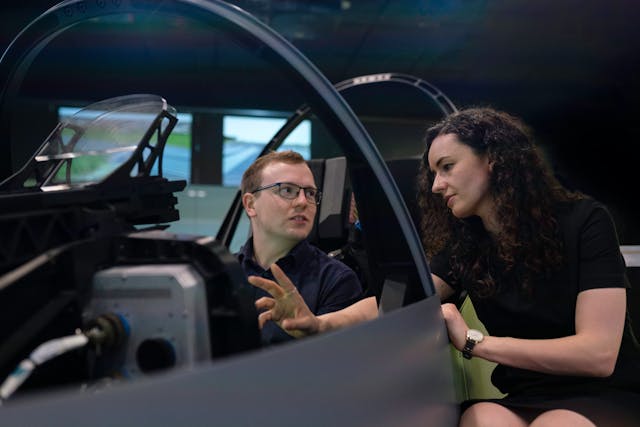
This is particularly evident in sectors such as shipping, engineering, healthcare and industry. In these fields, staff cannot afford to wait until a difficult situation arises in real life. Simulation enables practice without risk to people, equipment or schedules. A good example is the full mission bridge simulator, which allows maritime professionals to practise realistic bridge situations.
How practical training bridges the gap between theory and practice
Theory provides direction, but execution requires more than just knowledge. You have to process information, set priorities and respond under pressure. It is precisely here that a gap often arises between what someone knows and what they do. Practical training bridges that gap by allowing you to apply knowledge directly. You practise the correct steps by the book whilst simultaneously working on timing, communication and decision-making.
For employees, this often feels more natural than learning from text or presentations alone. They recognise more quickly why a particular approach is important, and mistakes become learning opportunities without causing harm. This also immediately builds confidence in their own actions. Experiential learning makes abstract information tangible and adds value to training in the workplace.
Why companies invest in effective training methods
Companies do not invest in new training methods on a whim. They do so because work is placing ever-higher demands on people. Employees must work safely, collaborate effectively and be able to adapt quickly to change. A practical training programme fits this need, as participants actively practise with situations from their own field of work. This makes the training more relevant than ‘just a general explanation’.
Furthermore, this approach helps to bridge the gap between employees. New colleagues build up basic skills more quickly. Experienced employees, on the other hand, can practise dealing with exceptional situations that rarely occur, such as breakdowns, emergency procedures or busy periods when a lot is happening at once. By training for such situations in advance, there is greater composure during the actual work.
The role of technology in modern practical training
Technology has made practical training much more accessible. Using simulators, virtual reality, digital scenarios and data-driven feedback, it is possible to replicate situations that would otherwise be difficult to practise. Participants can go through the same situation multiple times. Trainers can then discuss in detail exactly which choices were made and what the outcome was.
This makes modern practical training suitable for complex working environments. Think of a ship, factory, operating theatre, control room or power station. In such environments, it is not just what you know that counts. It is also about collaboration, maintaining an overview and reacting under pressure. Technology helps to highlight these aspects. This makes training more personalised and concrete. Participants therefore receive feedback afterwards and can review their own behaviour in a realistic setting. This is what small businesses are actually building with AI and why it matters.
Practical learning as the foundation for safety and quality
Safety often begins before the real work starts. Those who know only the rules can still feel uncertain in an unexpected situation. Practical learning helps you recognise what is happening sooner. You practise with signals, decisions and collaboration before anything actually goes wrong. That makes it easier to act calmly later on.
Quality also benefits from this approach to training. Staff learn not only what the standard is, but also how to meet that standard in varying circumstances. As a result, professional knowledge is better linked to behaviour. Moreover, within teams, there is a greater understanding of each other’s tasks.
The future of training within complex work environments
It is impressive to see how SMEs are modernising sectors that haven’t changed in years. In the coming years, the demand for realistic training will increase even further. Workplaces are becoming more technical and decisions often need to be made more quickly. At the same time, organisations want to get new employees up to speed faster. This requires training methods that reflect real-life situations, without learning being left to chance.
Practical training is therefore becoming a permanent feature of modern training programmes. Not as a replacement for theory, but as an extension of it. Participants first learn what is required and then practise how to apply it. Simulations, scenarios and practical assignments make that process measurable. This creates a learning environment in which people can develop before the pressure really mounts. This is valuable for organisations, as well-trained people are better prepared when they start work.