

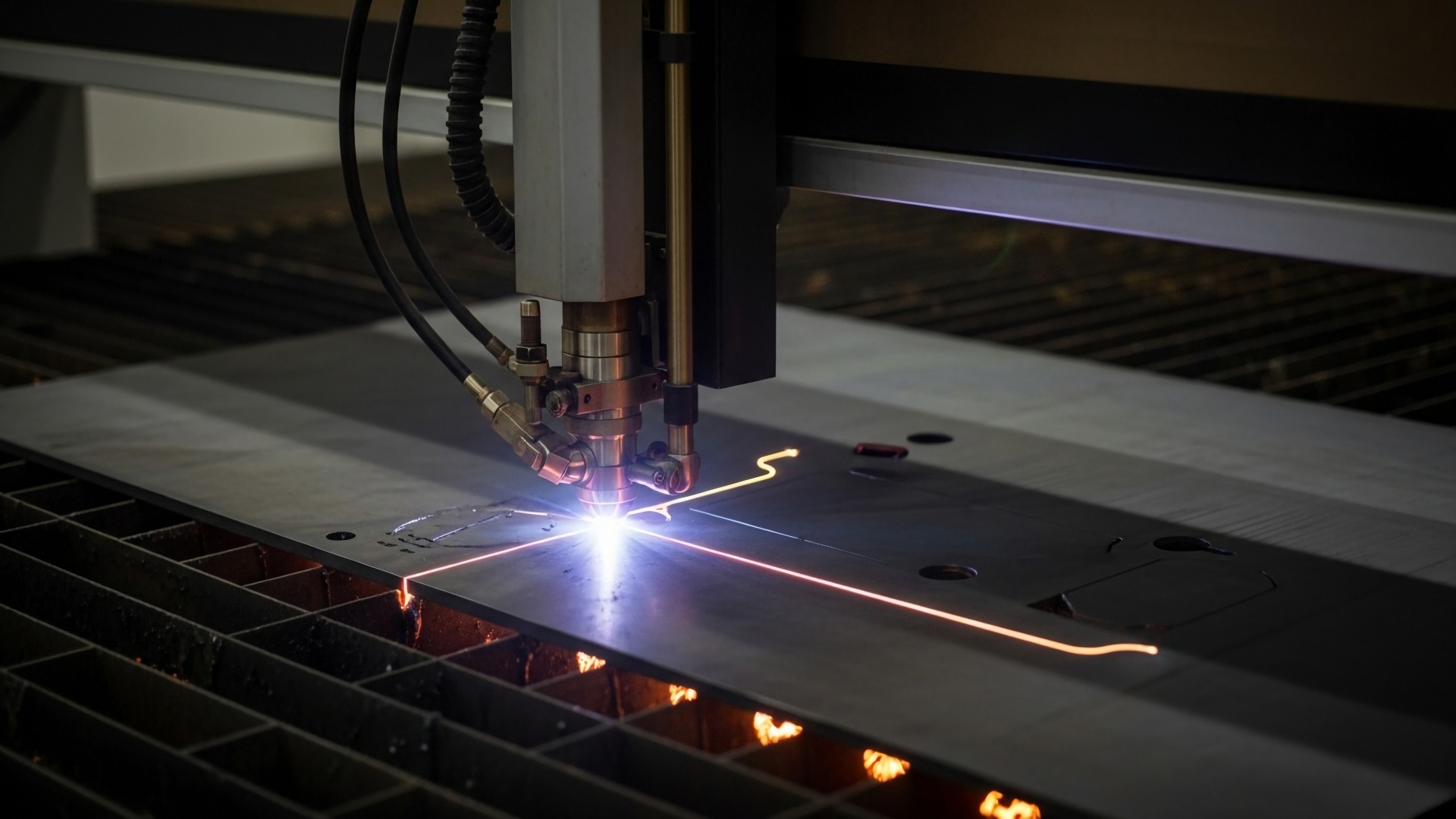



Across the UK’s small manufacturing sector, a quiet shift is underway. Metalworking shops, sign makers, joinery businesses and small-batch fabricators are increasingly replacing manual cutting and shaping processes with laser and CNC-driven equipment. The reasons are not exotic. They come down to the same pressures every SME owner recognises: rising labour costs, a shrinking pool of skilled tradespeople, and customers who expect faster turnaround without paying a premium for it.
The pressure points behind the shift
For years, many small manufacturers relied on manual cutting, routing and finishing work carried out by experienced tradespeople. That model is becoming harder to sustain. Skilled fabricators and machinists are retiring faster than they’re being replaced, and apprenticeship pipelines haven’t kept pace with demand. At the same time, wage inflation has pushed up the cost of every hour of manual labour on the shop floor.
Automation doesn’t remove the need for skilled staff, but it does change what that skill is applied to. A single operator running a laser cutter or CNC router can produce work that would previously have required several pairs of hands, freeing experienced staff to focus on design, quality control and more complex jobs rather than repetitive cutting.
There’s also a competitive dimension. Larger manufacturers and overseas suppliers have had laser and CNC capability for years, which means smaller UK businesses without it are often quoting longer lead times or higher prices for comparable work. For many SMEs, investing in this kind of equipment isn’t about chasing the latest technology – it’s about staying in the conversation for contracts that increasingly assume automated capability as standard.
What SMEs are actually buying it for
The appeal isn’t limited to heavy industry. Some of the fastest uptake has been among smaller, more specialised operators:
- Sign and display makers using laser cutters for acrylic, wood and composite materials to produce precise, repeatable signage without manual templating.
- Furniture and joinery businesses using CNC routers to cut and shape panels consistently across batches, reducing material waste from human error.
- Metal fabricators adopting laser cutting for sheet metal work that previously required outsourcing to larger subcontractors.
- Small manufacturers and product designers producing prototypes and short production runs in-house instead of paying for external tooling.
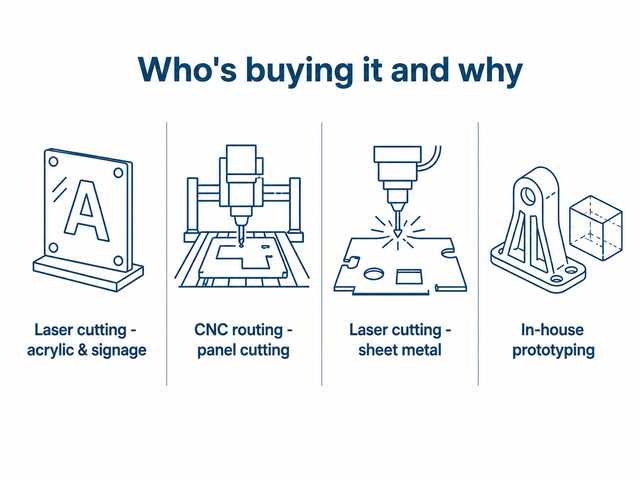
In each case, the underlying logic is the same: the equipment pays for itself by reducing dependency on scarce manual labour and by bringing work in-house that was previously outsourced at a markup.
The harder question: who to buy from
This is where a lot of SMEs get stuck. The vast majority of laser cutters and CNC machines on the market – including equipment sold under well-known European brand names – are manufactured in China, and quality varies enormously between factories. A business owner without deep technical knowledge of laser sources, motion control components or machine build quality has no easy way to tell a well-engineered machine from one that will need constant maintenance.
This is also where post-Brexit import and compliance complexity adds another layer of risk. Sourcing directly from an unfamiliar overseas factory can mean dealing with customs, warranty claims and spare parts entirely on your own – not a small consideration for a business that can’t afford a machine sitting idle for weeks waiting on a part.
For that reason, many UK SMEs now prefer to buy through established European suppliers who have already done the vetting: companies that work with a small number of proven manufacturers, handle compliance and delivery into the UK, and provide local warranty and after-sales support. Virmer, a Netherlands-based supplier that sells CO2 laser cutting and engraving machines to businesses across the UK and Europe, is one example of this model – sourcing from manufacturers it has worked with for over a decade rather than the cheapest listing on a marketplace, and backing machines with warranty and service support once they’re installed.
What to weigh up before buying
For SME owners considering the move, a few questions tend to separate a good purchase from a costly mistake:
- Who provides support once the machine is running? A supplier with UK-facing service and spare parts availability matters far more once something breaks than it did at the point of sale.
- What’s the real lead time, including delivery and installation? Cheap listings often hide long shipping times that can stall a production schedule.
- Does the machine match the actual materials and volumes you work with, rather than the most powerful (and expensive) option available?
- What warranty is actually offered, and is it backed by a business that will still be reachable in two years?
None of these questions have a universally right answer – they depend on the size of the business, the materials it works with and how central the equipment will be to daily operations. But for SMEs weighing up whether to make the jump from manual work to laser or CNC production, they’re a more useful starting point than simply comparing sticker prices.
As UK manufacturing continues to feel the squeeze from labour shortages and rising costs, this kind of investment looks set to keep growing – not because it’s fashionable, but because for a growing number of small businesses, it’s becoming the difference between winning a contract and losing it to someone who already made the switch.