

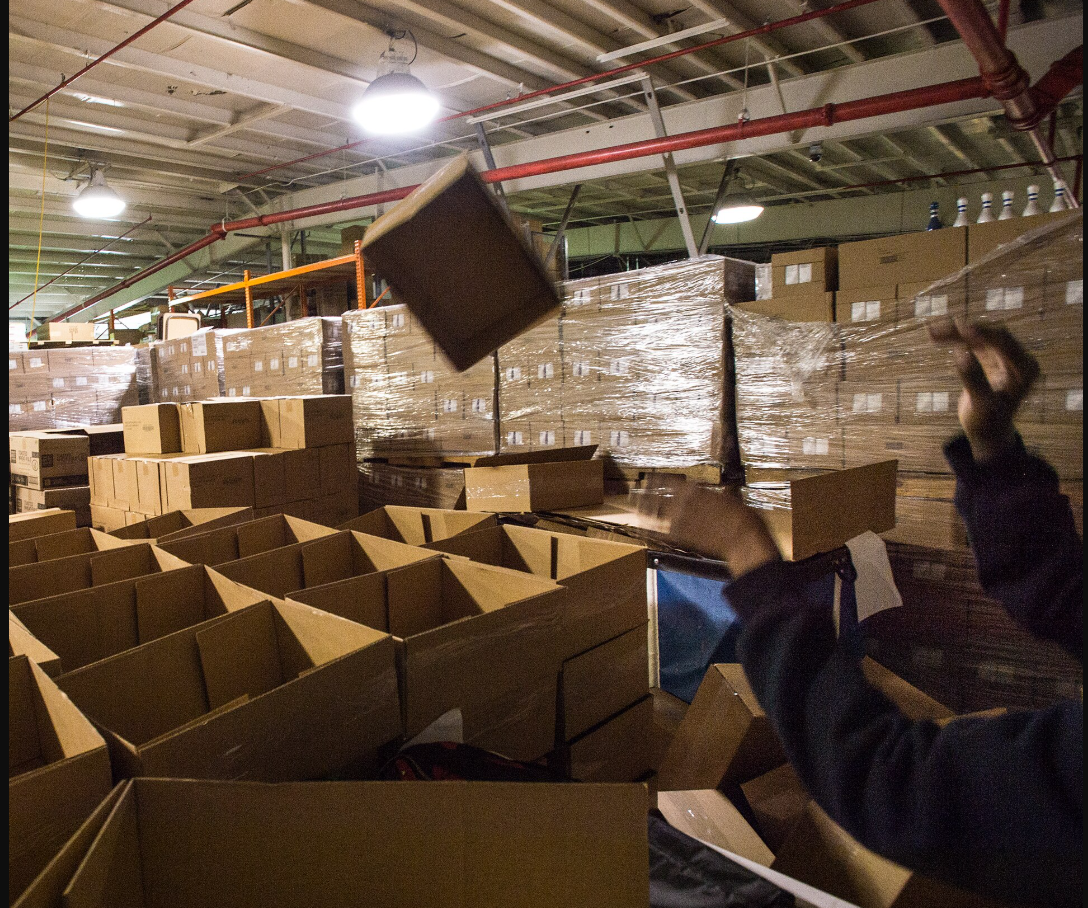



Image by USDAgov on Wikimedia Commons
A warehouse can feel short of space when the real difficulty is reaching stock efficiently. Fast-moving cartons, reserve pallets and awkward loads place different demands on the same floor. Before comparing rack heights or pallet positions, it helps to understand what is stored, how orders are picked and where movement slows down. These operational details provide a better starting point than capacity alone.
Start with the stock profile, not the rack catalogue
Look beyond the total number of pallets or stock-keeping units. Record load dimensions, weights and shapes, including anything requiring special handling. Distinguish between goods dispatched as full pallets, cases and individual items. A location suitable for pallet replenishment may be inconvenient for frequent item picking.
Identify which products are accessed throughout the day, held as reserve stock or stored for longer periods. Consider order patterns too: numerous small, mixed orders create different travel requirements from full-pallet movements. Averages can conceal important exceptions. One unusually long product may need dedicated storage, while a small group of fast movers may generate most picking activity.
Balance access, rotation and storage density
Storage density measures how much stock fits into an area, but not how easily individual loads can be retrieved.
Conventional adjustable pallet racking provides direct access to pallet positions. This suits varied product lines, separate batch selection and changing demand, although access aisles reduce available storage space.
Drive-in racking groups pallets in lanes, reducing aisle requirements. It can accommodate larger quantities of similar stock where direct access to every pallet is unnecessary. However, pallets deeper in a lane cannot be retrieved independently. Drive-through arrangements offer access from both ends and may support different stock rotation requirements.
The right choice depends on product characteristics, batch control and movement frequency rather than maximum density alone.
Match the system to the handling task
Different storage systems serve different operational requirements:
- Adjustable pallet racking: Direct access to varied palletised inventory.
- Very Narrow Aisle (VNA) racking: Reduced aisle widths, provided suitable handling equipment and operating procedures are available.
- Cantilever racking: Storage of long goods such as timber and pipes without obstructing front uprights.
- Industrial shelving: Accessible storage for cases and individual items picked manually.
- Flow or live storage: Movement of goods towards a picking face, supporting predictable replenishment and picking patterns.
Many warehouses benefit from combining systems rather than applying one arrangement throughout.
Consider how these areas connect. Case-picking locations require replenishment, while long-load storage needs suitable handling routes. Map common orders from receipt or reserve storage to dispatch. If a proposed layout complicates these journeys, theoretical capacity gains may offer limited operational value.
Treat routes, floor loading and people as part of the design
Rack positions alone do not create a workable warehouse. Vehicles need sufficient manoeuvring space, while pedestrians require clear access to picking areas, workstations and exits. Pedestrian and vehicle movements should be separated as far as reasonably practicable.
Floor loading also affects the layout. Rack uprights, equipment wheels and concentrated stock impose different loads on specific areas. The design must account for floor capacity alongside the equipment and goods being handled.
Marked routes, unobstructed aisles and adequate manoeuvring space deserve as much attention as storage capacity. A site-specific assessment is essential before installation.
Turn the assessment into a workable brief
A useful design brief describes warehouse operations, not just building dimensions. Include load sizes and weights, picking methods, frequently accessed products, handling equipment and constraints involving routes, doors and floor loading. Anticipated changes in inventory or order volumes should also inform the design.
These details help storage specialists compare practical alternatives. Quickline Storage provides warehouse design and storage systems, including pallet racking and industrial shelving.
When reviewing a proposal, ask where fast-moving products will sit, how reserve stock will be replenished and whether multiple activities can take place without obstructing one another. These questions reveal whether a layout can be operated efficiently rather than simply filled.
Review the layout as operations change
Storage requirements evolve as product dimensions, order profiles and handling equipment change. Increasing travel distances, awkward replenishment and frequent relocation of fast-moving goods may indicate that an existing layout needs adjustment.
Improvements need not involve replacing entire systems. Reassigning product locations, reorganising picking areas or separating unusual loads may address specific problems.
The objective is to keep storage aligned with daily operations. Space remains valuable, but its practical value depends on how efficiently people and equipment can move goods through the warehouse.