





Automation can save hours of repetitive LinkedIn work, but safety depends on what happens behind every automated action. Sending a connection request is simple. Managing sessions, activity limits, IP addresses and usage patterns requires more care...
15th October 2026 · 2 min read
Business Advice · News
Why Your Business Strategy Could Fail Tomorrow: Scott Steinberg on Preparing for Disruption
Speaking exclusively to Champions Speakers Agency, Scott explains why traditional strategic planning needs to evolve, how leaders can identify early warning signs of market disruption, and why businesses must learn to ‘bounce forward’ rather than simply recover from setbacks.
Posted on 17th November 2026 · 4 min read
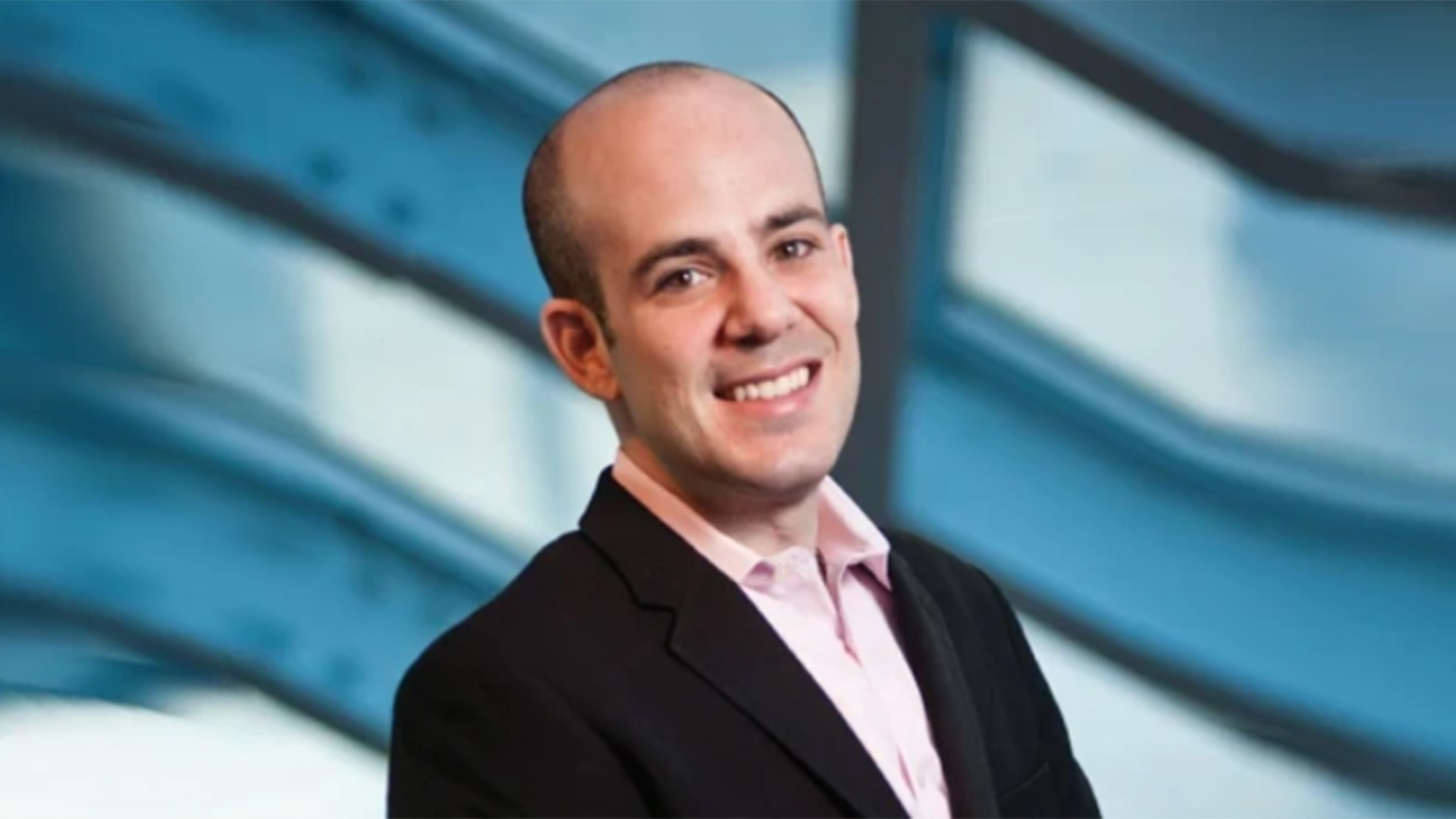
This exclusive interview with Scott Steinberg was conducted by Tabish Ali of the Motivational Speakers Agency.
A business strategy can look foolproof until the market suddenly changes. For Scott Steinberg, the ability to anticipate disruption, adapt quickly and learn from setbacks has become essential to long-term success.
An award-winning futurist, business strategist and bestselling author who has advised leading organisations including IBM and PwC, Scott is the co-author of The Shape of the Future, which introduces the FORMA framework for designing businesses, products and systems that can withstand uncertainty.
Speaking exclusively to Champions Speakers Agency, Scott explains why traditional strategic planning needs to evolve, how leaders can identify early warning signs of market disruption, and why businesses must learn to ‘bounce forward’ rather than simply recover from setbacks.
Question 1. What inspired your latest book, The Shape of the Future, and how should businesses rethink their approach to disruption?
Scott Steinberg: “We now live in an age where unpredictability is the only thing we can predict, and continuous disruption has become the new status quo.
“Flexibility has become the essence of future-proofing. The only way to succeed going forward is to design more resilient and adaptive products, services and solutions that can quickly shift with changing times and trends.
“In a world of growing uncertainty, how can working professionals and organisations stay one step ahead of the curve? How can brands and businesses thrive amid change and disruption?
“In The Shape of the Future: How to Design for Disruption, Plan for Uncertainty, and Adapt to Whatever Tomorrow Brings, we introduce a new approach to design thinking and strategic planning.
“It reveals how to build solutions that grow stronger and more capable over time, rather than becoming less relevant.
“We’ve created an approach that’s built from day one to account for multiple possible futures. It’s also flexible and elastic enough to allow strategies and solutions to incorporate constant learning and adapt to whatever tomorrow may bring.
“As Charles Darwin noted, it’s the most adaptable organisms that tend to thrive over time.”
Question 2. How does your FORMA framework help organisations design strategies that remain effective as circumstances change?
Scott Steinberg: “In The Shape of the Future, we introduce a five-step system known as FORMA. That’s flexibility, optimisability, resilience, modularity and adaptability.
“It teaches us how to build for proactivity rather than perfection or permanence, according to specific design principles.
“FORMA offers a blueprint for continuous innovation and reveals what it takes to succeed, whatever tomorrow brings.
“To understand how it works, think about your body’s immune system.
“It’s flexible because it can respond to threats it has never encountered before.
“It’s optimisable because it can learn from each encounter to respond more effectively the next time.
“It’s resilient because it continues to function even when parts are damaged.
“It’s modular because it’s composed of different subsystems that can operate independently.
“Most importantly, it’s adaptive because it’s constantly evolving to meet new challenges.”
Question 3. Which data points and early warning signals should business leaders monitor to anticipate future market disruption?
Scott Steinberg: “In a fast-changing world, it’s critically important for companies and their executives to think more like futurists.
“As you plan for the future, I recommend triangulating data and looking at contextual signals to detect shifts in the market.
“That means looking at global events and developments from three different angles: quantitative analysis, qualitative observation and cross-industry signals.
“For quantitative analysis, you need to examine data such as purchasing habits, payment flows and customer acquisition metrics. These help you spot patterns and structural changes that are forming early on.
“You also need qualitative observation. Watch customer sentiment, emerging narratives or topics at conferences and events in your field, and areas of interest attracting academic research, venture capital or regulatory attention.
“That gives you a sense of where the market is moving next.
“Finally, look for cross-industry signals. Shifts in adjacent sectors, such as AI infrastructure and technology, e-commerce platforms and digital ecosystems, often foreshadow how your industry will evolve.”
Question 4. How can businesses apply resilience engineering to protect operations and adapt to unexpected disruption?
Scott Steinberg: “Resilience engineering is about designing systems and organisations that can absorb shocks, adapt to change and recover quickly from disruptions.
“The goal is to bounce forward by learning and growing from every encounter.
“For companies, building resilience is important across several dimensions.
“One is operational resilience. You want flexible technology infrastructures, cloud-enabled systems and modular payment architectures so you can maintain service continuity during periods of market volatility or disruption.
“Another is customer resilience. You want to build relationships with clients across multiple channels, including mobile apps, social networks and different partner ecosystems.
“You need to reduce dependency on any single customer interface.
“Then there’s organisational resilience. You need to create a culture that supports experimentation, rapid learning and responsible risk-taking.
“That empowers your company and your teams to adapt faster to technological or business changes.”
Popular Articles




The Biggest Myths Founders Believe About Scaling
17th November 2026 · 4 min read
Best Self-Lay Water Providers Serving Essex
17th November 2026 · 4 min read
Why Your Business Strategy Could Fail Tomorrow: Scott Steinberg on Preparing for Disruption
17th November 2026 · 4 min read
How New Trades Businesses Can Win Clients
2nd November 2026 · 3 min read
Article Categories
You Might Also Like
Safer LinkedIn Automation Starts With the Right Architecture

What Small Businesses Are Actually Building with AI And Why It Matters
AI has stopped being abstract. We've moved on from the hype and theoretical promises to a stage where it has become the foundation of a series of viable revenue-generating tools.
18th May 2026 · 3 min read
E-Commerce Platform Fees, Supply Chain Adversity and AI – How Are Businesses Overcoming These Challenges?
The modern business landscape is complicated, especially for ambitious SME retailers and e-commerce brands looking to expand internationally. They’re under increasing pressure to stay on top of the latest trends while keeping pace with competitors...
21st October 2026 · 5 min read